L’IDENTIFICATION AVEC L’AUTRE (IDENTIFICATION WITH THE OTHER)
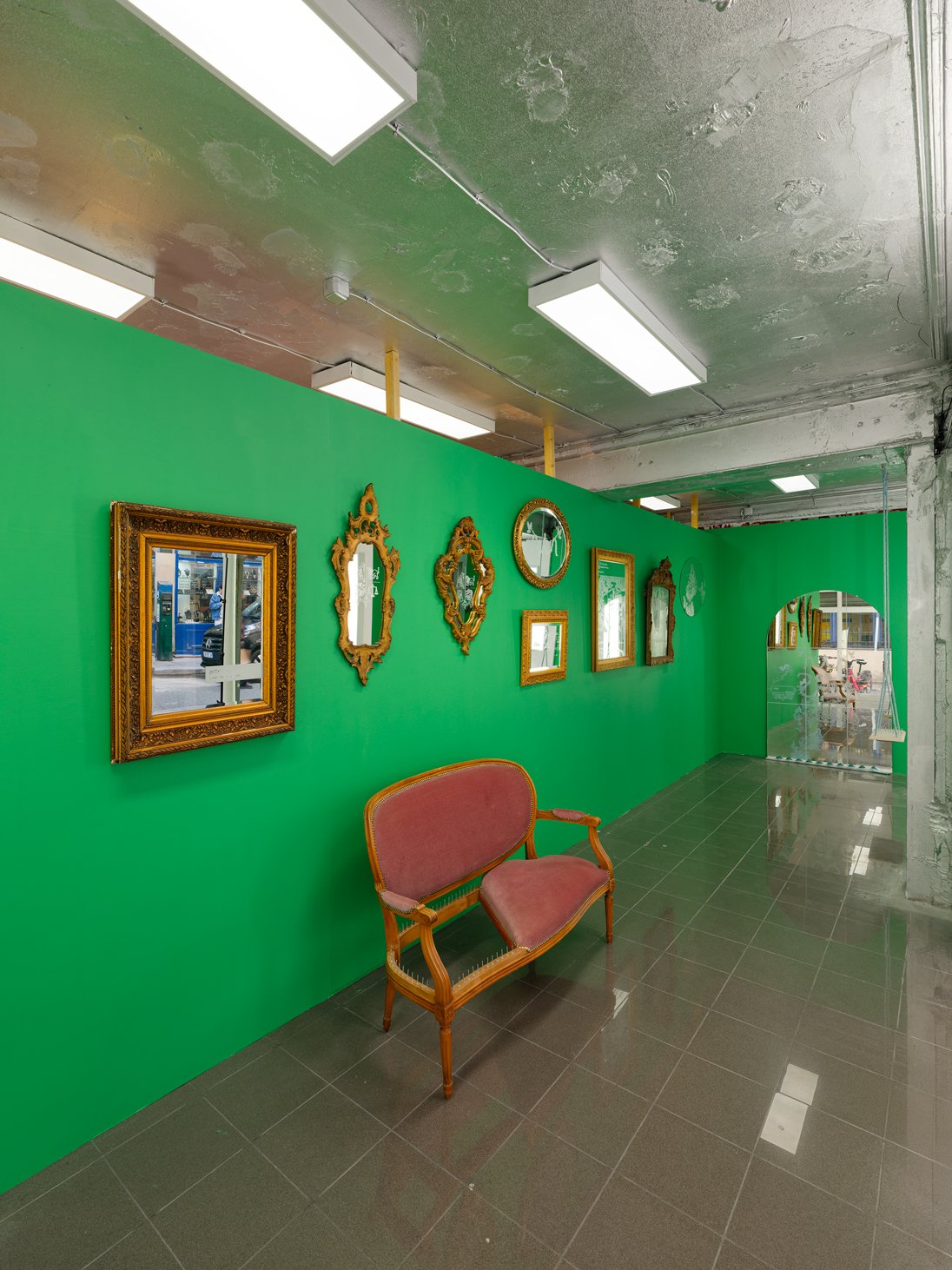
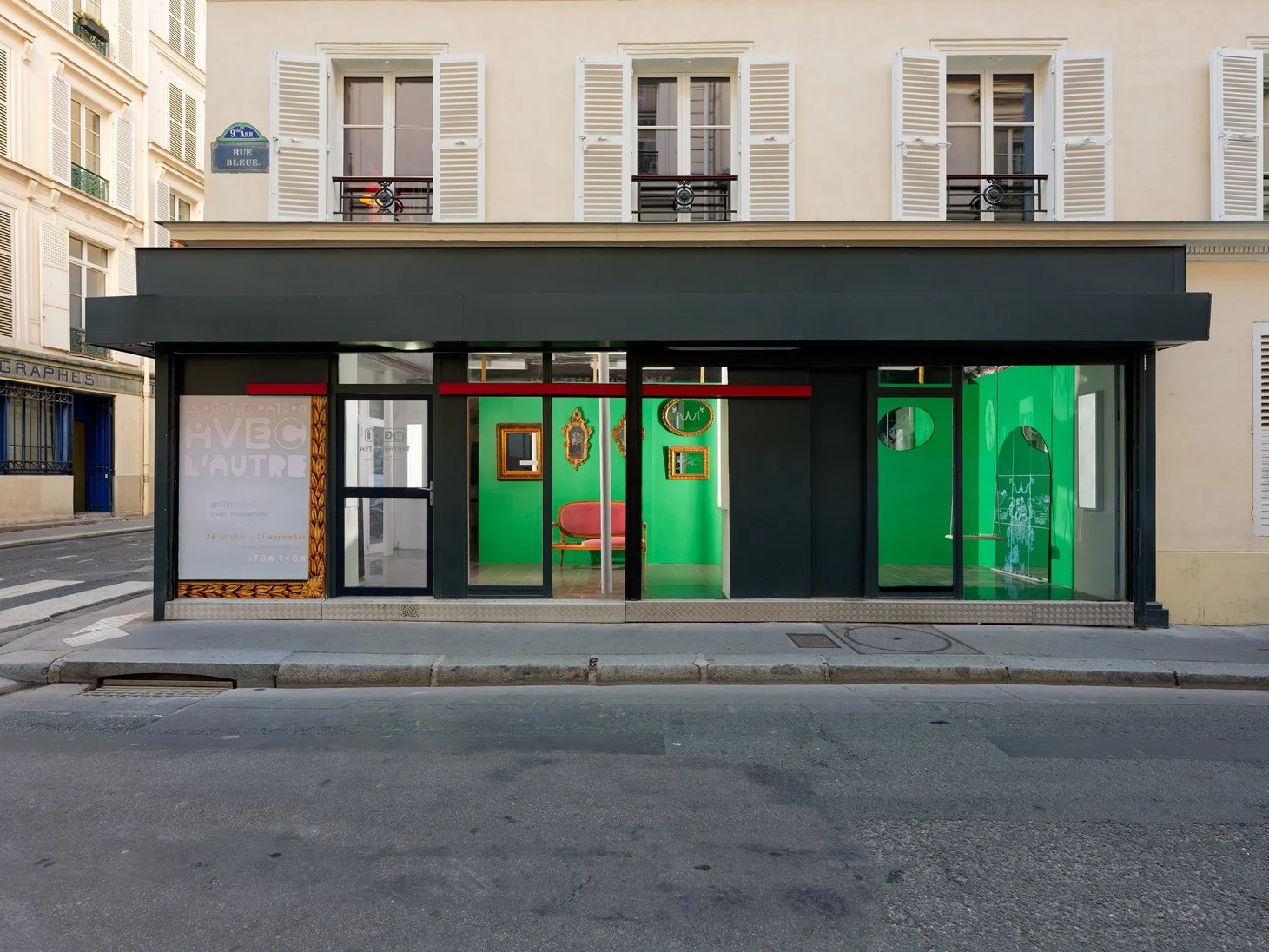
ITEM IDEM is pleased to present L’identification avec l’autre (Identification with the Other), a new installation by Kendalle Getty that takes the Hall of Mirrors at Versailles as a point of departure, transforming the gallery’s storefront into a mirrored environment of self-projection, estrangement, and theatrical display. Featuring a monumental centerpiece alongside a series of engraved mirrors and newly conceived sculptural works, the presentation explores self-mythology through a staged encounter between sculptural self-portraits and altered domestic objects, examining visibility, consumption, and the performance of identity within contemporary visual culture.
For Kendalle Getty, the self is not a fixed subject, but a surface under constant revision. Shaped by social media, fashion, beauty standards, inherited privilege, cultural displacement, and the mechanics of public image-making, identity becomes both a psychological condition and a commercial product. In L’identification avec l’autre (Identification with the Other), Getty positions the mirror as a site of exchange between artist and viewer: an object that reflects, implicates, and destabilizes.
The exhibition expands the artist’s ongoing inquiry into non-belonging, performance, and the symbolic violence of visibility. Having spent formative years between the United States and Europe, Kendalle Getty describes herself as culturally suspended between worlds, neither fully American nor European. This condition of in-betweenness becomes a generative framework for the installation, in which French decorative traditions, aristocratic fantasy, contemporary alienation, and consumer culture are brought into uneasy proximity.
Presented within ITEM IDEM’s storefront context, L’identification avec l’autre (Identification with the Other) operates as both an exhibition and a retail display. Editioned objects, including fans referencing M/other and postcards from Getty’s Angry Feminist Pin-Up series, will be available for purchase at the storefront.
The installation is exhibited at ITEM IDEM in Paris, France from October 14 – November 14, 2026.
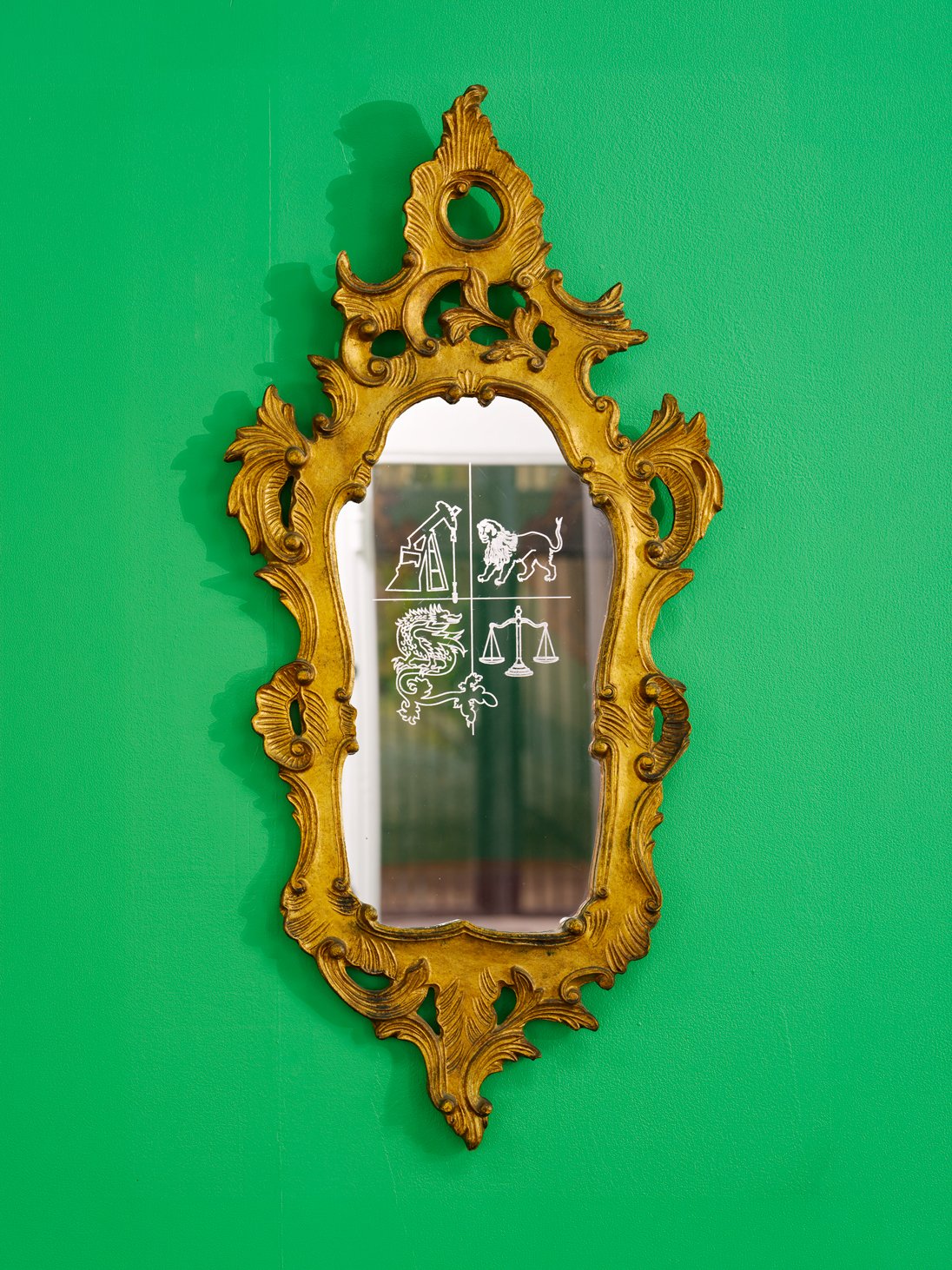
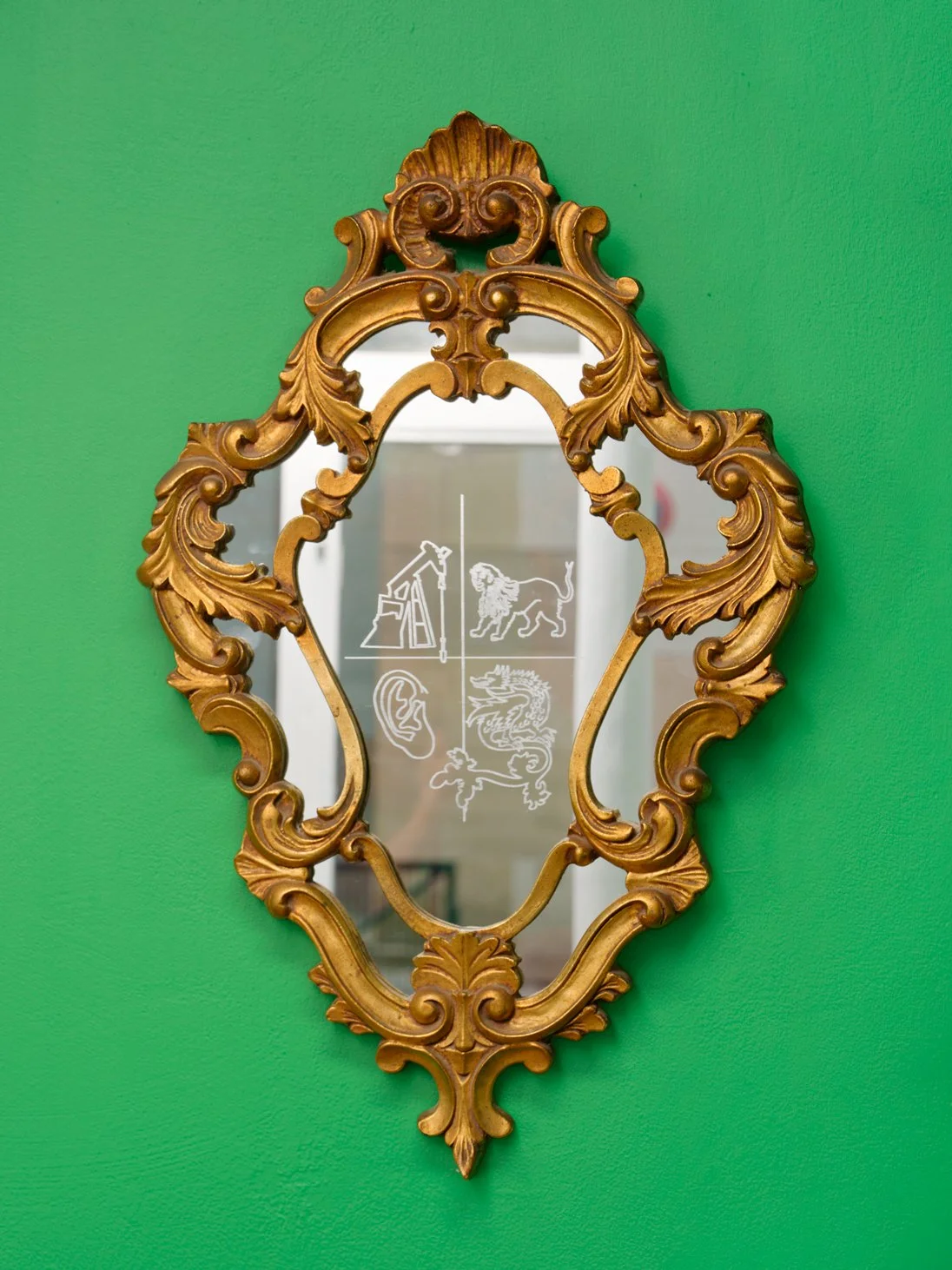
Getty Family Crest I (Dragon)
16.5 × 35 × 1 in / 42 x 88 x 3 cm
Engraved antique mirror
2026
Identity yields profit today: our imagos forever tweaked by the influences of social media, the fashion industry, ever flux beauty standards, and corporate greed. The psychological landscape of self grows more and more hostile as we chisel ourselves into the forms generally accepted, which is to say, generally marketable. As a pathological outsider, I find it more and more confusing to relate both to my true self and to what I can see of the other. How much of my experience of otherhood can we attribute, though, to American culture?
I have long considered myself a cultural bastard; raised without television, I don’t speak this language of pop icons, kitsch fables, and camp onomatopoeia. I don’t culturally belong to the United States the way other Americans do, having spent formative years in both the US and Europe. I also don’t fit in neatly with Europeans. I belong nowhere; which is to say, I belong equally everywhere. This non-belonging grants me a special kind of freedom—at the cost of a special kind of loneliness. I find myself faced with the same hurdle in every language: the need to translate not just words, but concepts, connotations, feelings. Words, spoken, mostly fail me: thus, I must communicate via art and via action.
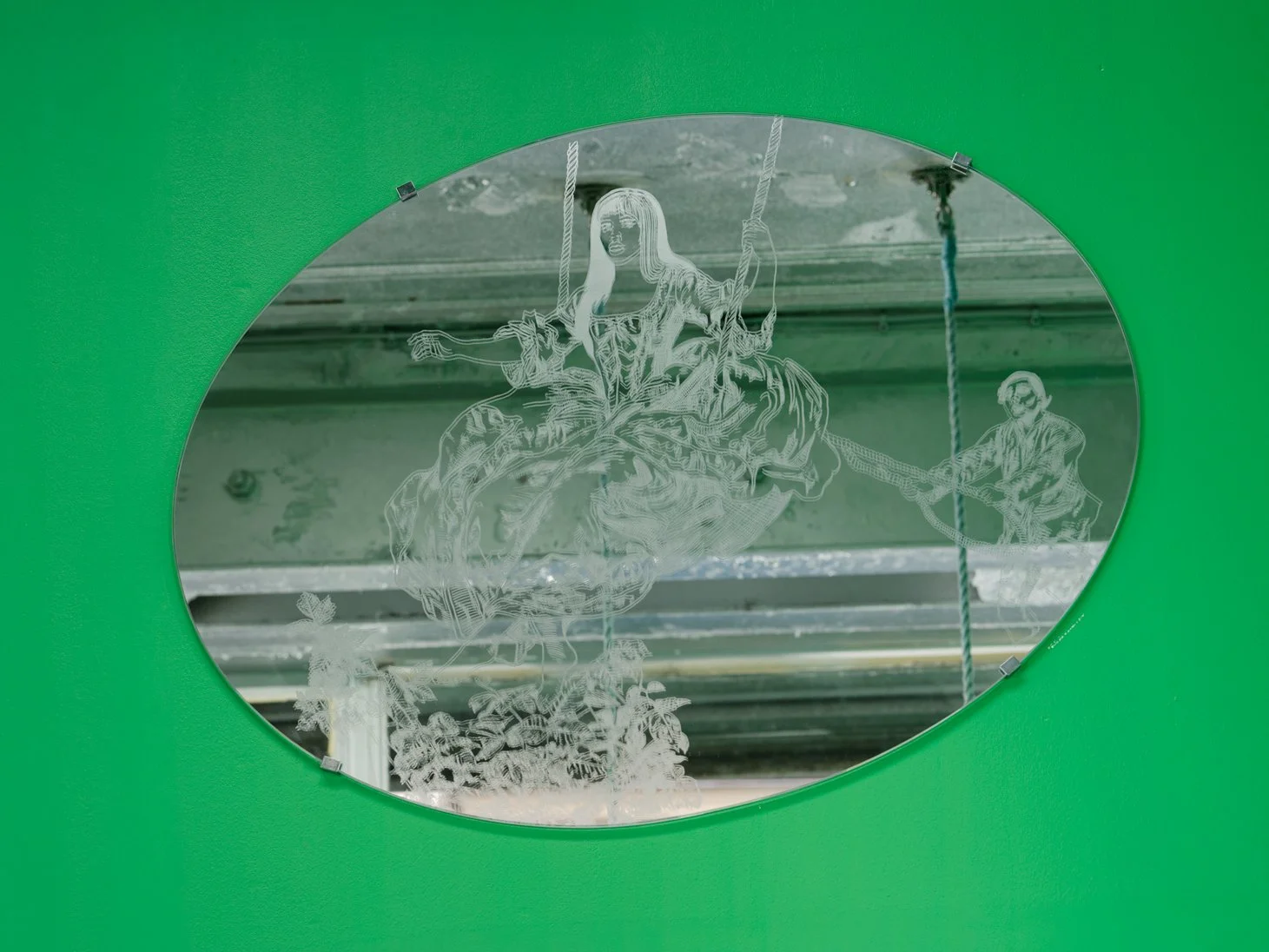
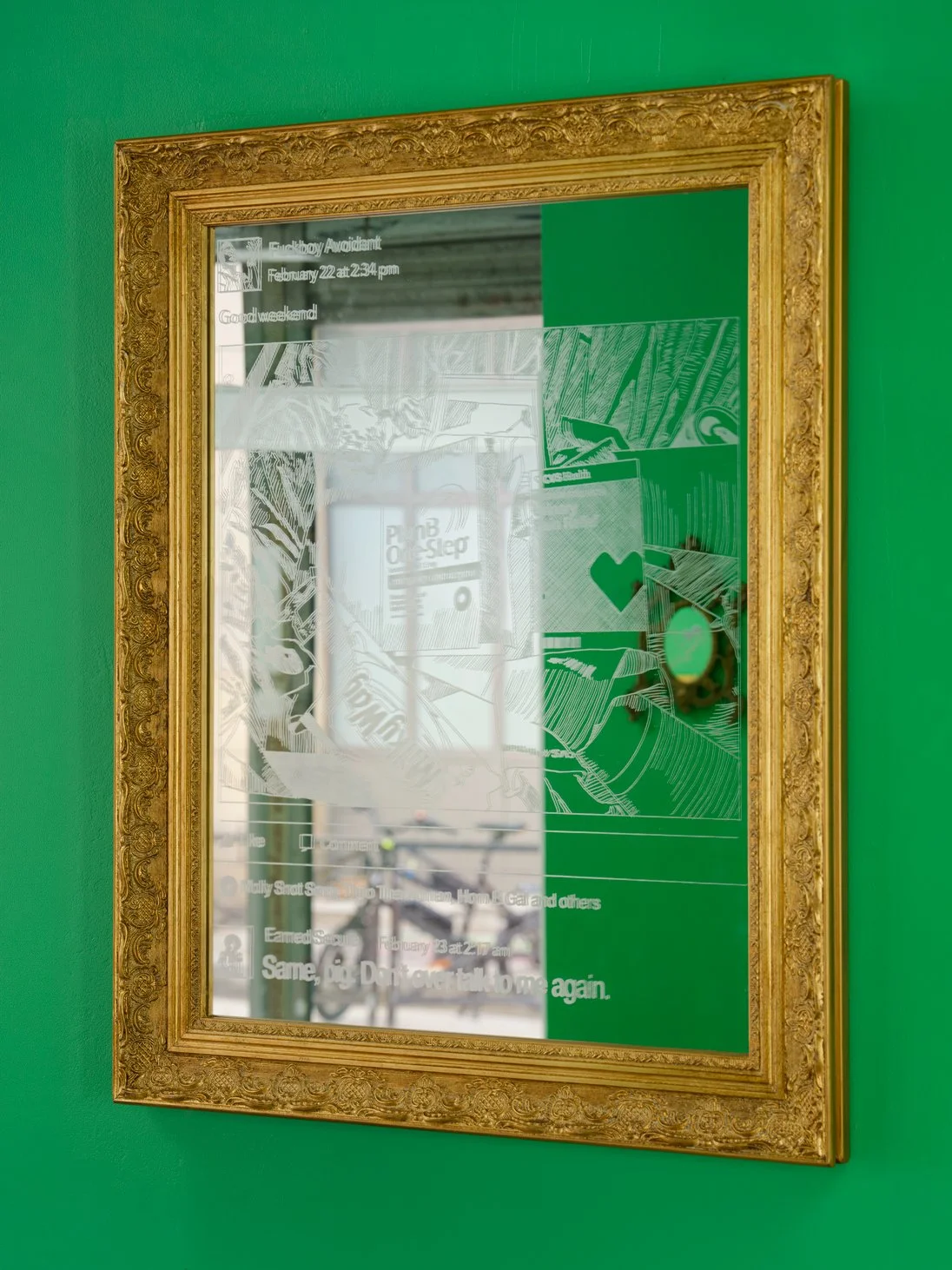
What does it mean to be a bastard princess? Some compare me to Marie Antoinette and wish me death over rumors and presumptions. Others see me as a poser, unwelcome to subculture and incapable of suffering. Some see the crab meat under my shell of projected identity—and try to boil me alive. So I look for myself everywhere, from the mirrored halls of Versailles to the literal reflections of the other. One who sees my symbols, sigils, and art in their own reflection must identify simultaneously with my art and with themselves. This is why I have created mirrored works that touch on my identity, as well as universal experiences such as love and disappointment (in my Fuckboy toile) and my outsider/insider view of the contemporary American pastoral in a French tradition: my urban sprawl toile. These toiles are etched into arched mirrors à la mirrored hallways of Versailles, in reference to the queen who, as a teenage outsider, was bestowed with the hefty crown in a country that hated her and spread rumors that ultimately led to her much-celebrated murder.
-Kendalle Getty
Getty Family Crest II (ear)
18.5 × 29 × 1 in / 47 x 73 x 3 cm
Engraved antique mirror
2026
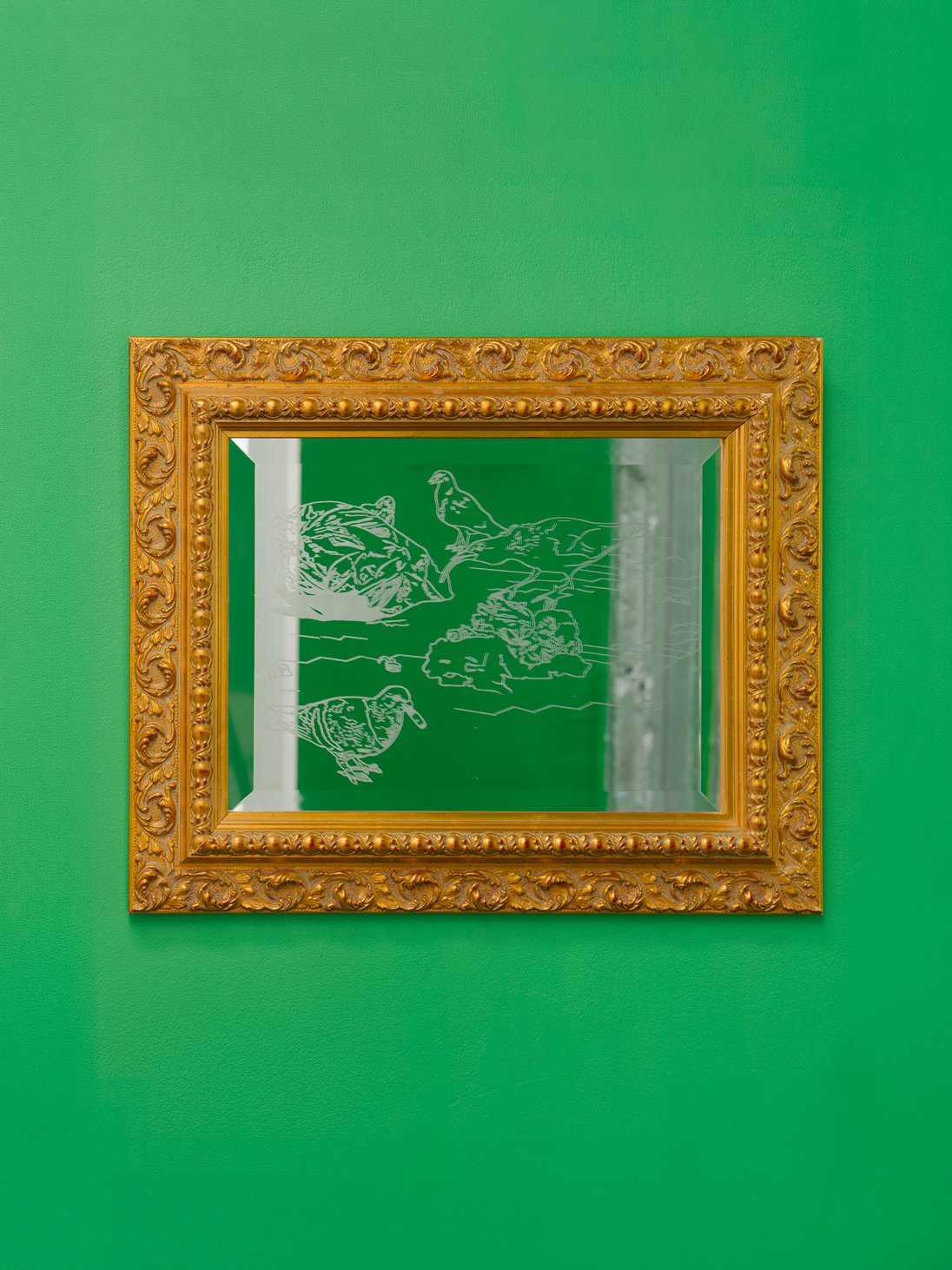
Pastorale Dystopique: Les Oiseaux et Leur Repas
20 × 18.5 × 1.5 in / 50 x 47 x 4 cm
Engraved antique mirror
2026
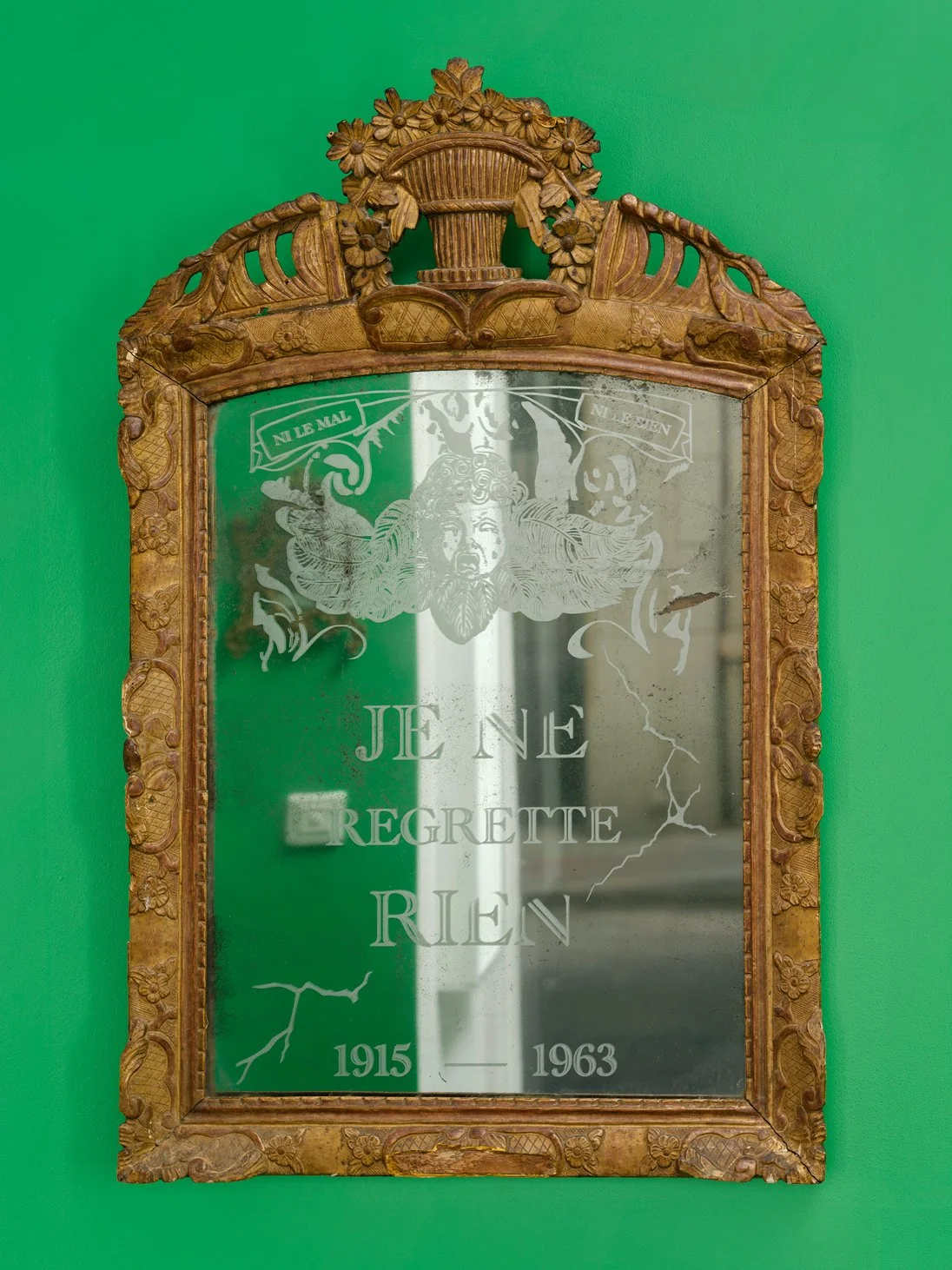
Je ne réfléchis à Rien
24 × 38 × 2 in / 62 x 97 x 5 cm
Engraved antique mirror from the 1700s
2026
Fragonaut
31.5 × 24 in / 80 x 60 cm
Engraved mirror
2026
Les Vestiges du Fuckboy
24 × 35 × 2 in / 60 x 90 x 5 cm
Engraved mirror
2026
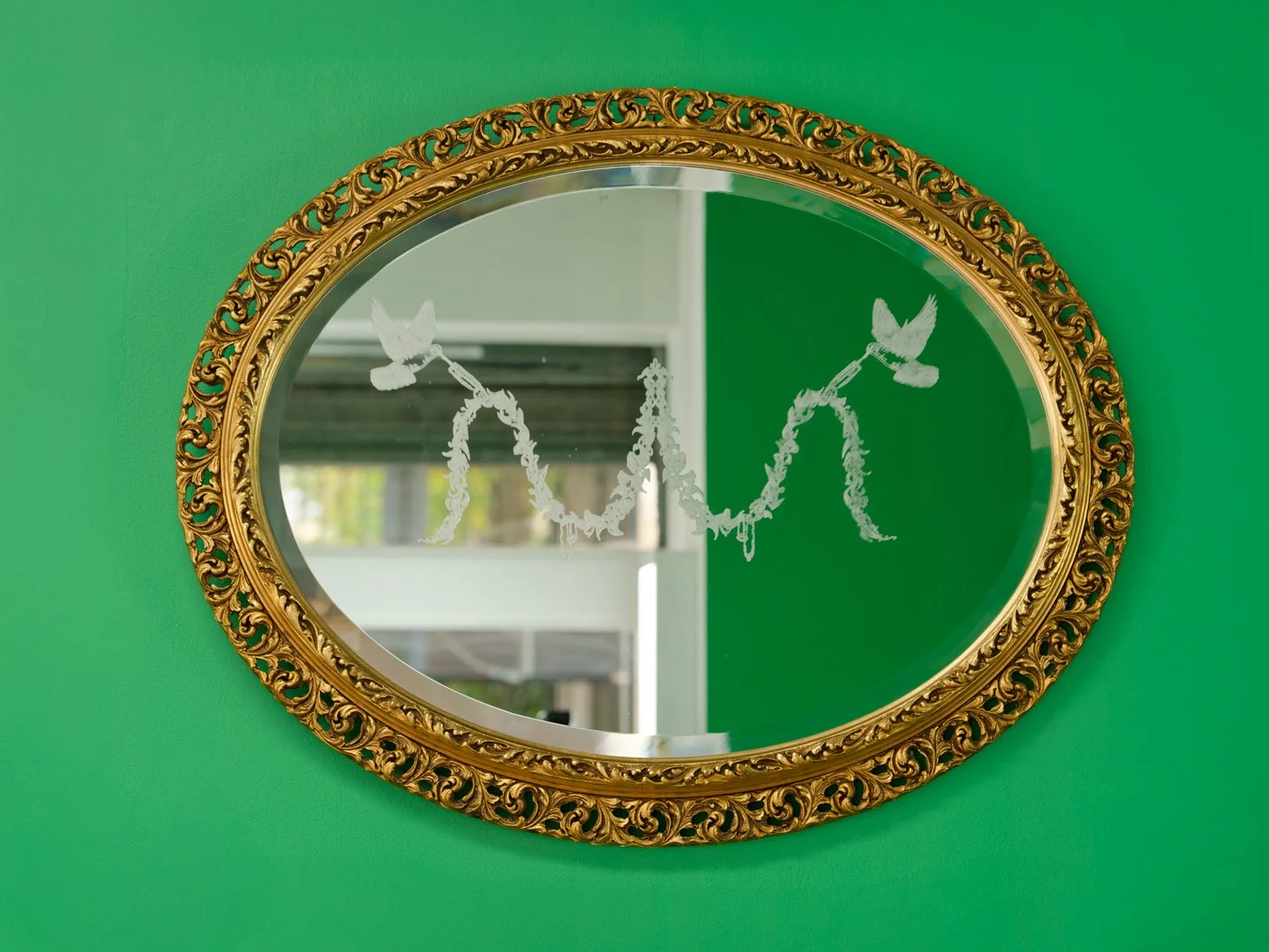
Pastorale Dystopique: Garland
28 × 20 × 1 in / 72 x 50 x 2.5 cm
Engraved antique mirror
2026
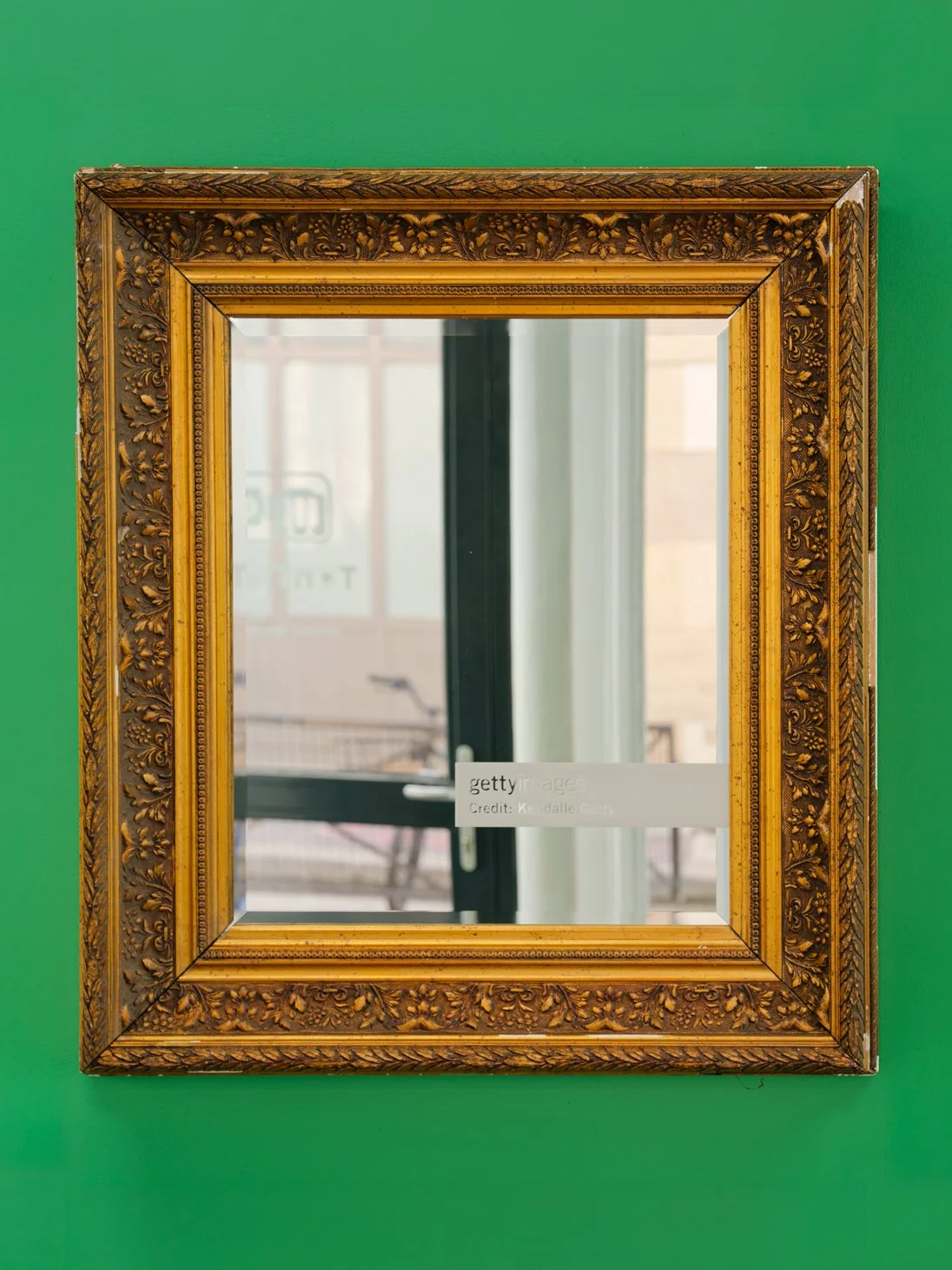
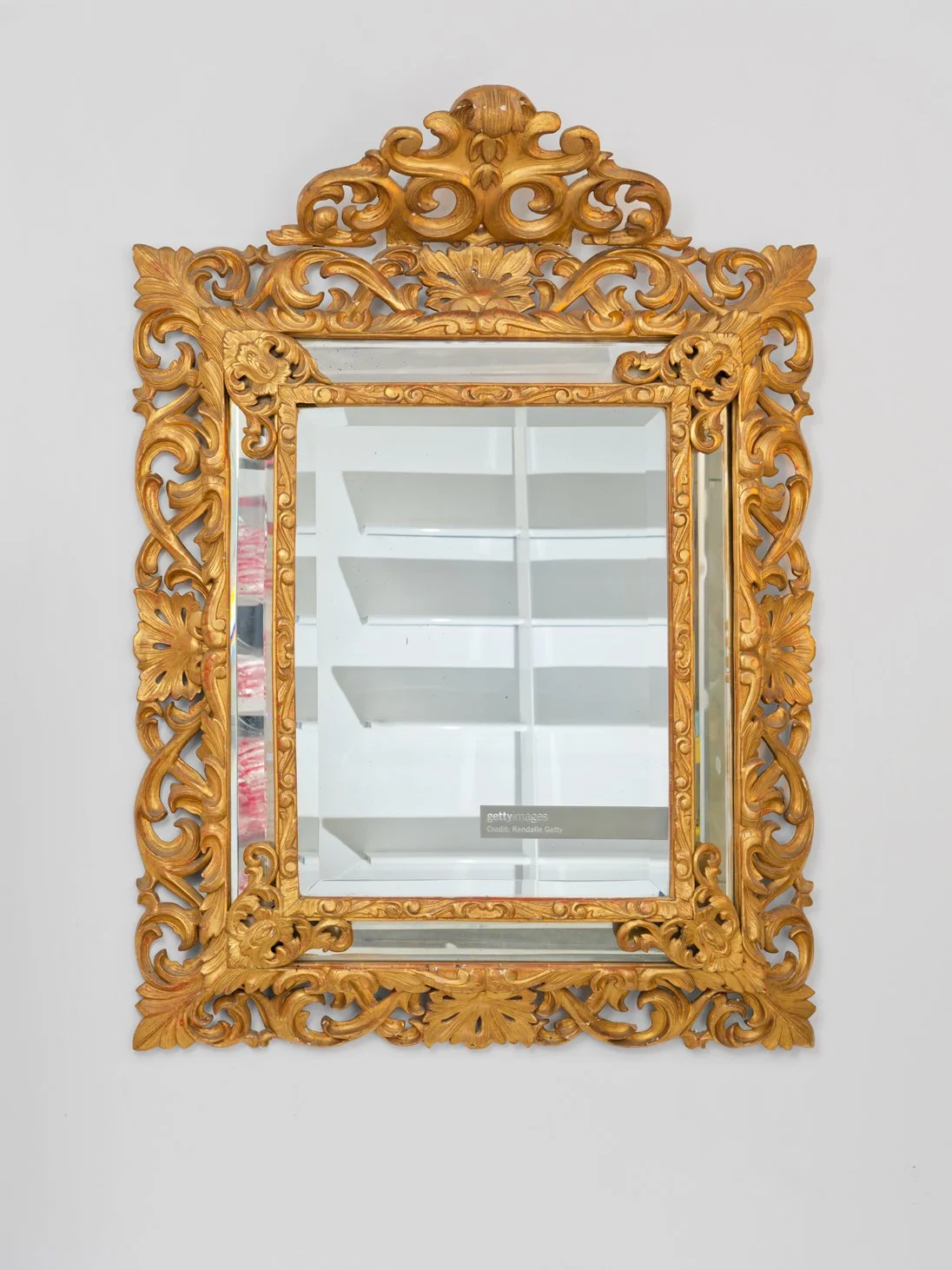
The Coveted Watermark III
27.5 × 31.5 × 3 in / 70 x 80 x 8 cm
Engraved antique mirror
2026
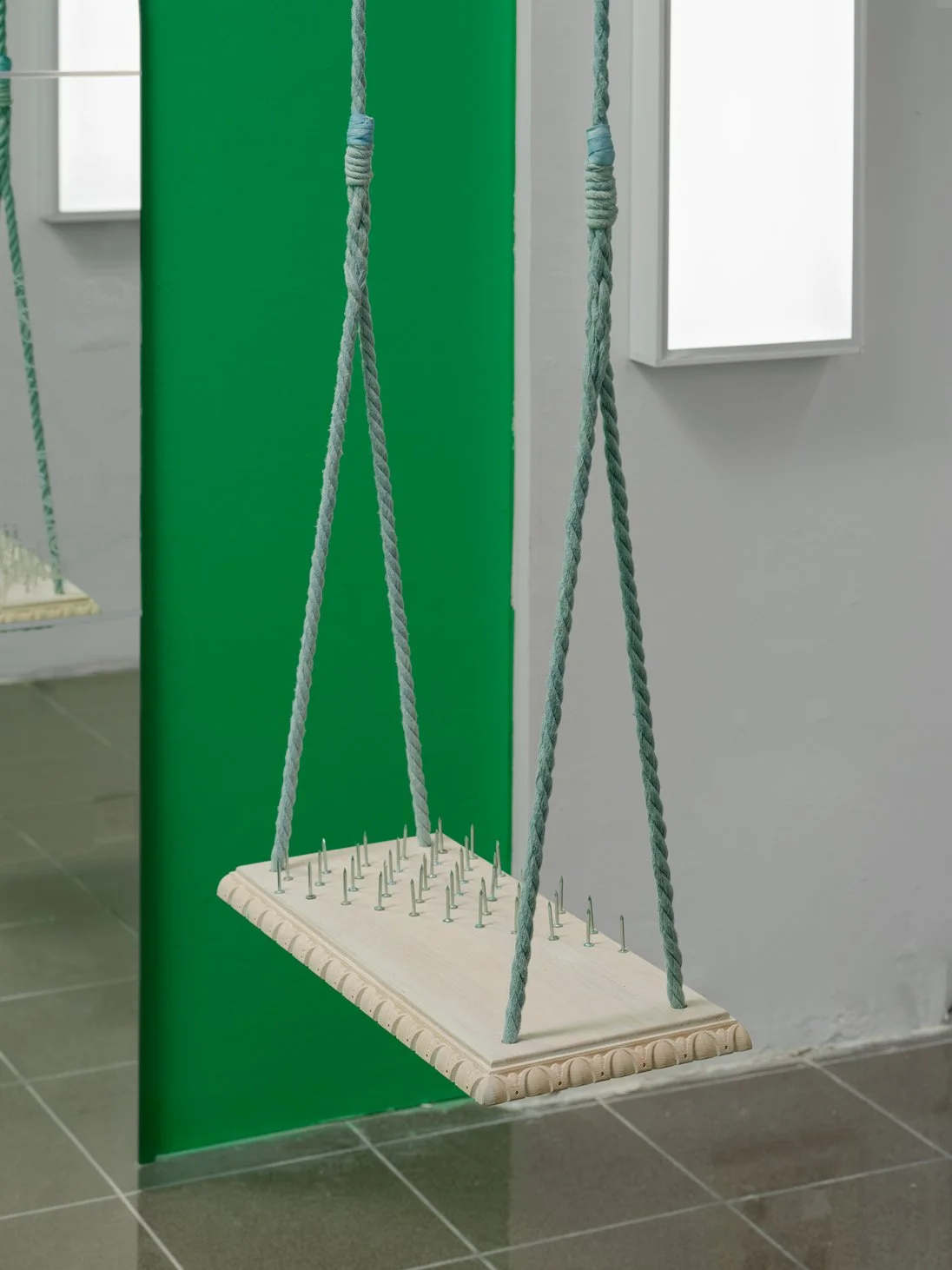
The Discreet Harm of the Bourgeoisie
10 x 23 in / 25 x 58 cm (height variable)
Wood, jute, nails
2026
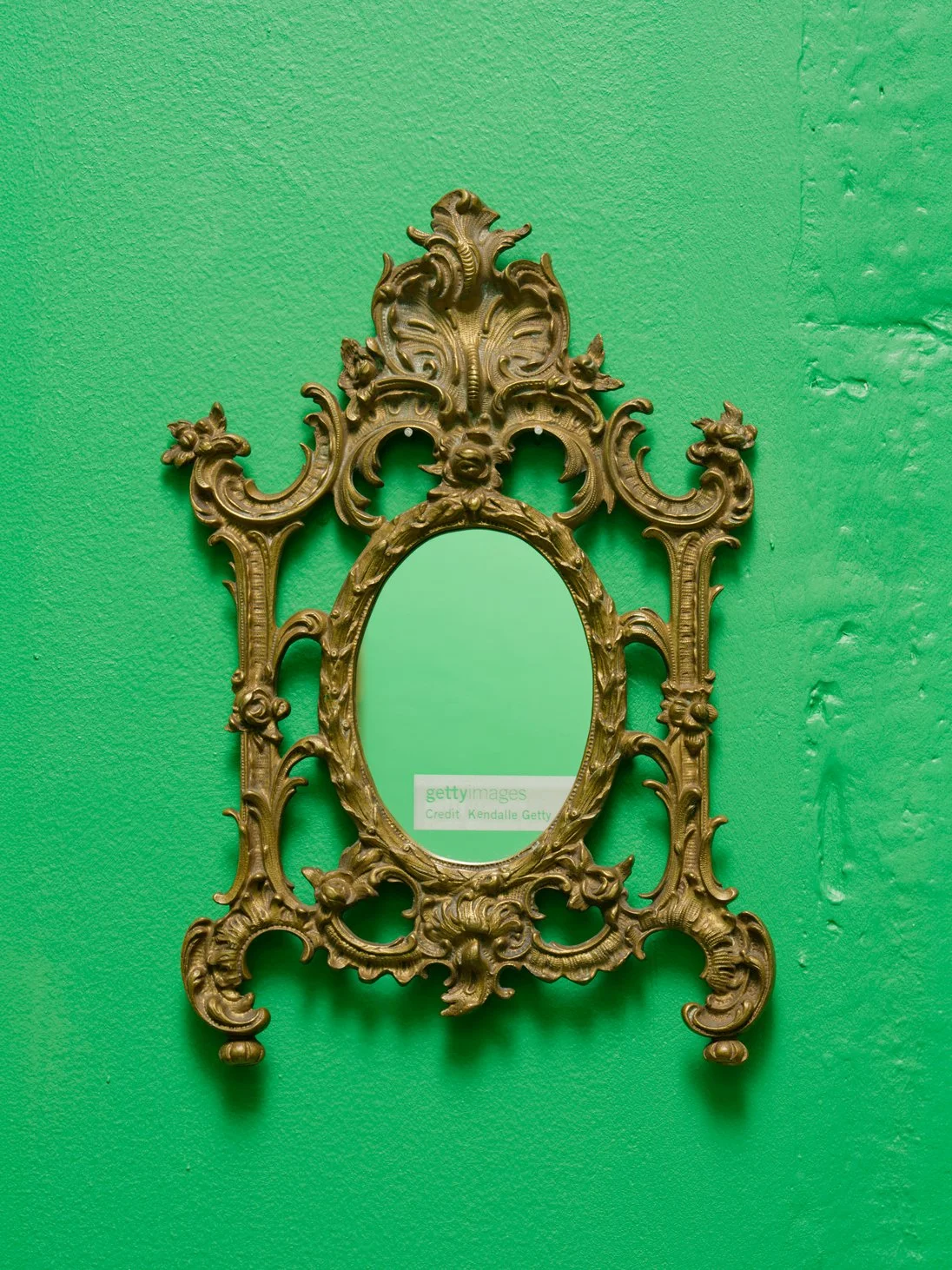
The Coveted Watermark II
8.7 in x 12 in / 22 x 31 cm
Antique brass frame, engraved mirror
2026
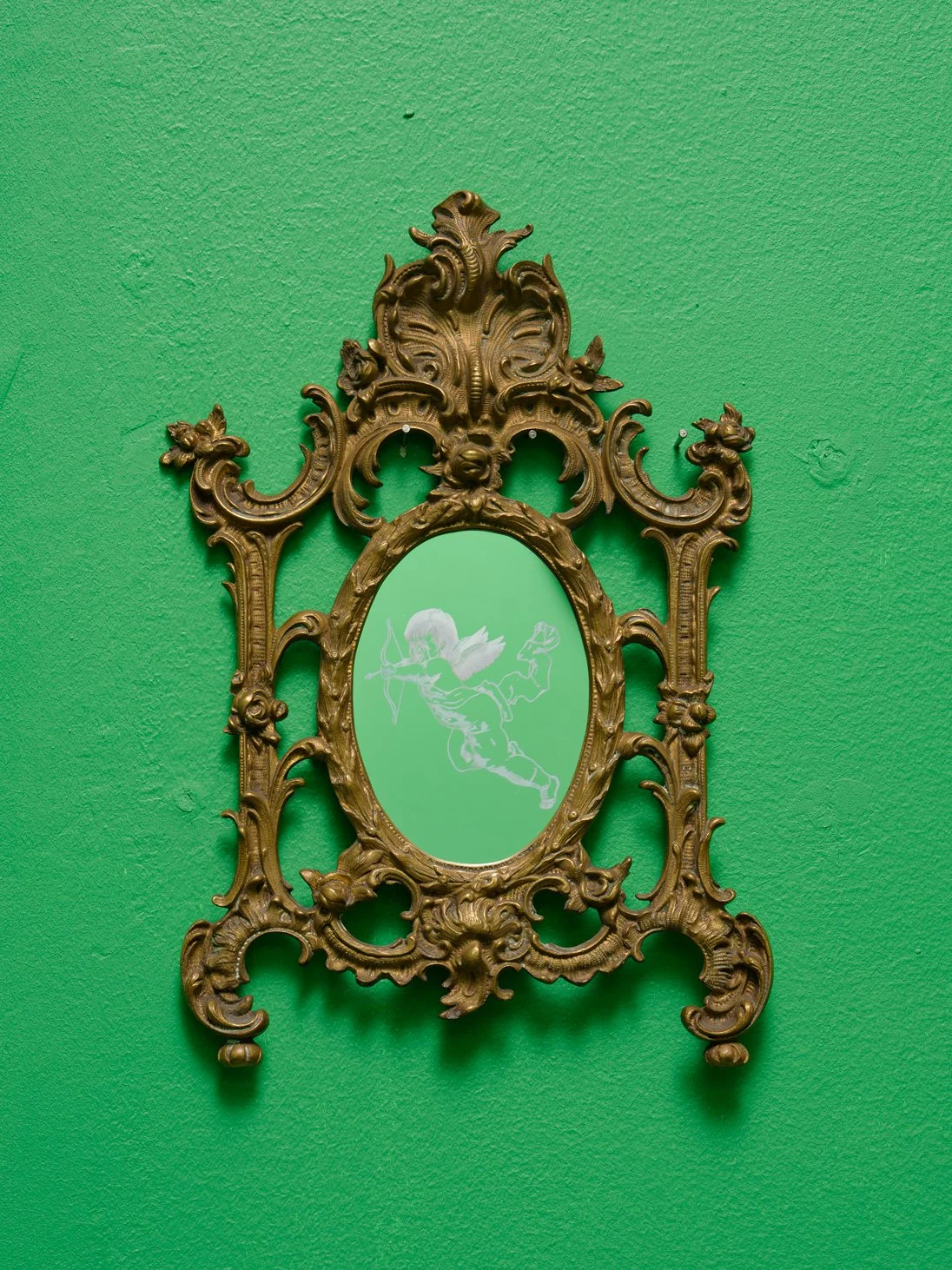
Reluctant Cupid
8.7 in x 12 in / 22 x 31 cm
Antique brass frame, engraved mirror
2026
The Coveted Watermark IV
47 × 71 × 10 in / 120 x 180 x 25 cm
Engraved antique mirror
2026
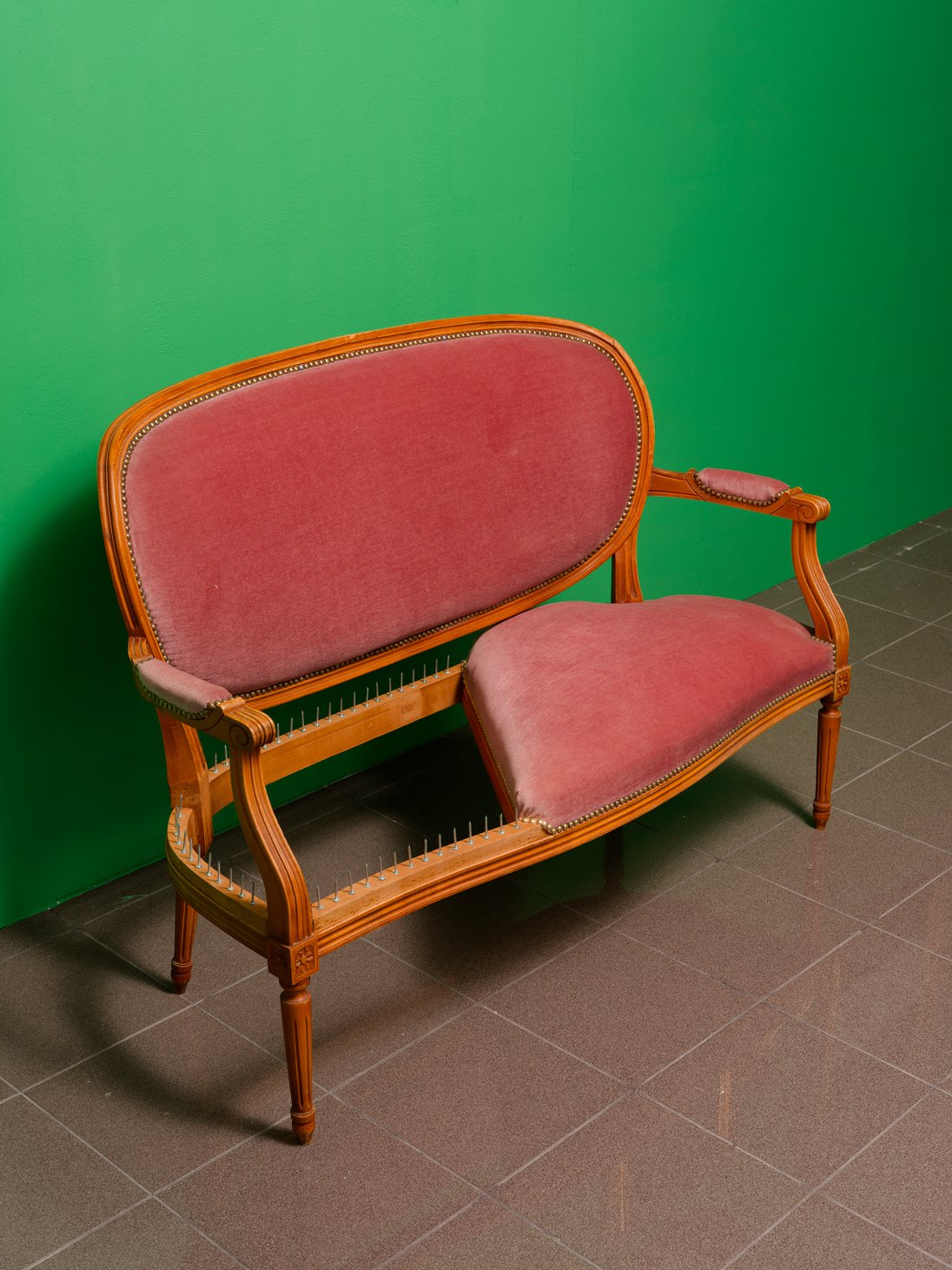
The Discreet Harm of the Bourgeoisie II
49 × 34 × 20.5 in / 125 x 87 x 52 cm
Vintage settee, nails
2026
L’identification avec l’autre installed at ITEM IDEM, Paris, 2026.
All photos by Aurélien Mole.
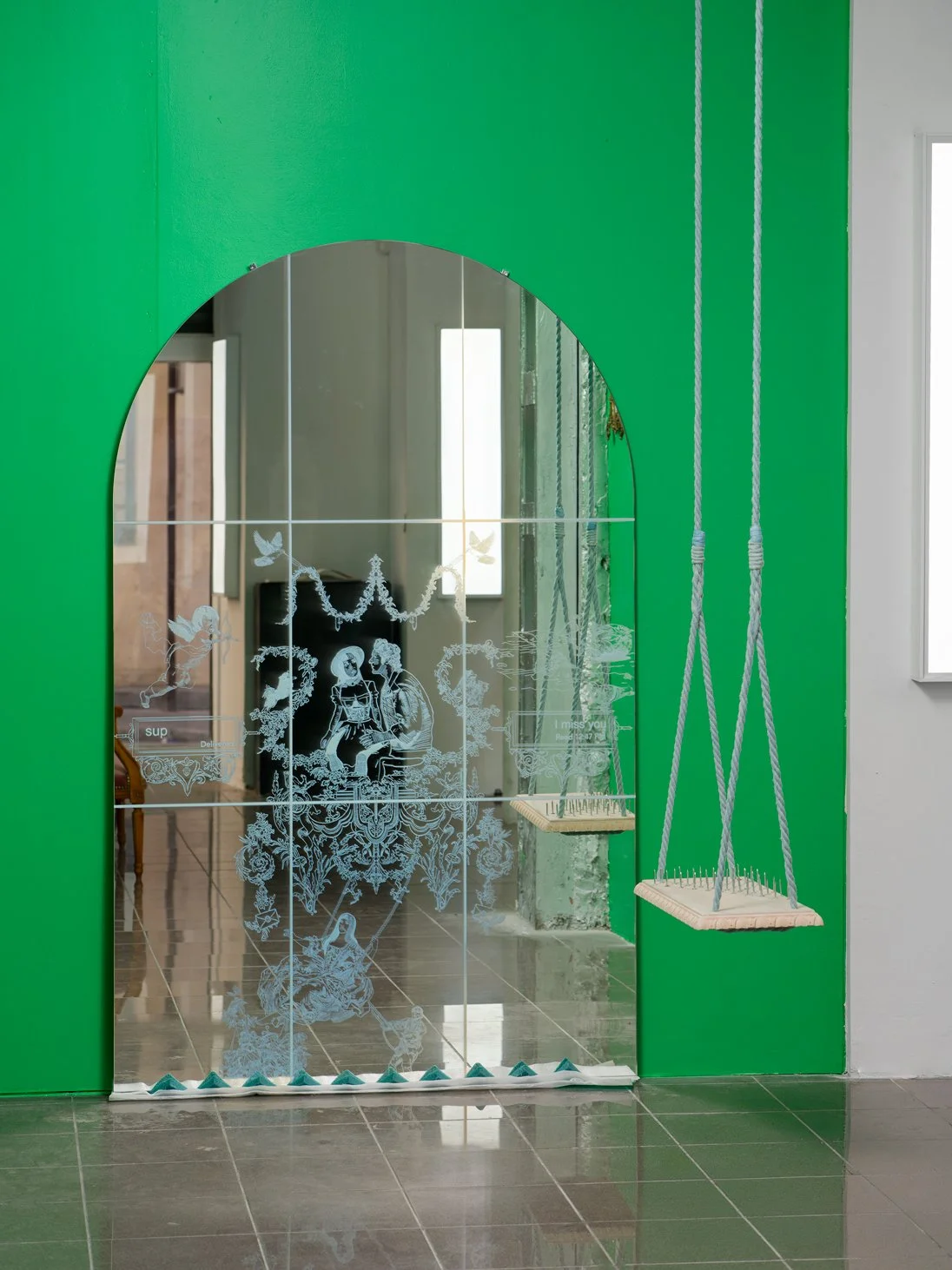
Pastorales Dystopiques: Modern Love
45 x 72 in / 114 x 183 cm
Engraved custom mirror
2026